The Importance of Tire Rotations
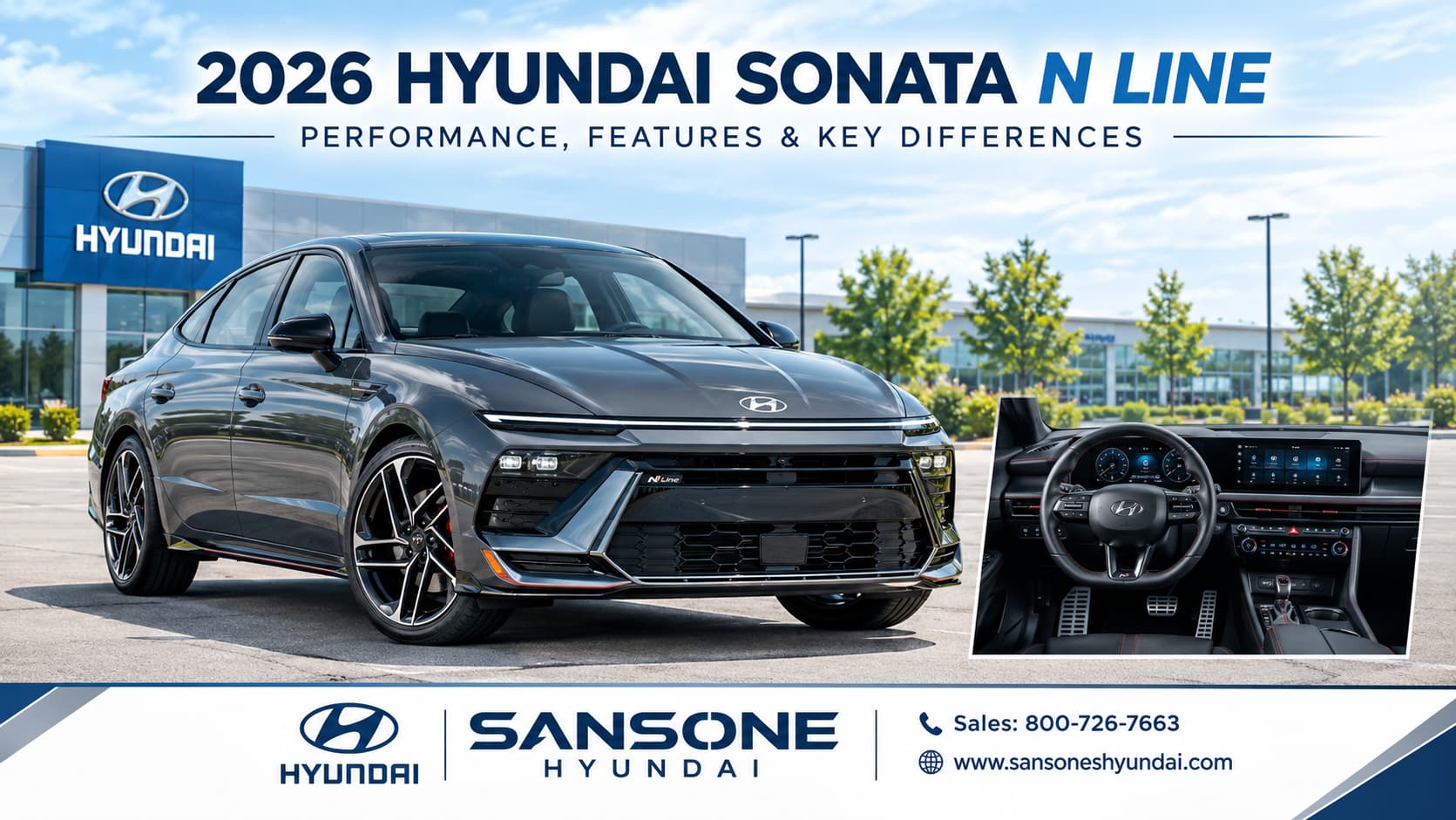
The 2026 Hyundai Sonata lineup spans six trims, and the N Line sits at the top of the gas-powered range. At $36,050 MSRP versus $27,450 for the base SE, the N Line carries an $8,600 higher starting MSRP. That's a meaningful gap. What exactly changes for that money, and is it worth it, depends entirely on what you're looking for in a midsize sedan. Here's what the upgrade actually delivers, confirmed from official sources. What Changes Under the Hood? This is the most significant difference between the N Line and every other Sonata trim. The standard Sonata SE and SEL Sport run a 2.5-liter naturally aspirated 4-cylinder producing 191 horsepower at 6,100 RPM and 181 lb-ft of torque at 4,000 RPM, paired with a conventional 8-speed automatic transmission. The 2026 Sonata N Line replaces that entirely with a 2.5-liter turbocharged 4-cylinder producing 290 horsepower at 5,800 RPM and 311 lb-ft of torque at 1,650–4,000 RPM, a 99 hp and 130 lb-ft jump. That torque peak beginning at just 1,650 RPM means the power arrives immediately from low speeds, not after the engine has had time to spool. The transmission is also different. The N Line uses Hyundai's N 8-speed Wet Dual Clutch Transmission (DCT) with steering wheel paddle shifters, not a conventional torque-converter automatic. A wet DCT uses fluid cooling to manage heat during high-demand driving, delivering faster gear changes than a traditional automatic at the cost of a slightly different feel at low speeds compared to a conventional unit. The N Line is FWD only, all-wheel drive is not available on this trim. Feature 2026 Sonata SE 2026 Sonata N Line Engine 2.5L naturally aspirated 2.5L Turbo Horsepower 191 hp @ 6,100 RPM 290 hp @ 5,800 RPM Torque 181 lb-ft @ 4,000 RPM 311 lb-ft @ 1,650–4,000 RPM Transmission 8-speed automatic N 8-speed Wet DCT with paddles Drivetrain FWD FWD EPA MPG (City/Hwy/Combined) 28/38/32 23/32/27 What Else Changes Beyond the Engine? The powertrain is the headline change, but the N Line also receives a distinct set of chassis, exterior, and interior upgrades that aren't available on any other Sonata trim. Chassis and steering The N Line uses a sport-tuned suspension and Rack-mounted Motor-Driven Power Steering (R-MDPS), replacing the column-mounted MDPS found on every other Sonata trim. R-MDPS provides more direct steering feedback by placing the motor closer to the rack. The result is a measurably sharper steering response that drivers transitioning from the standard Sonata will notice immediately. Wheels and tires The N Line uses 19-inch N Design alloy wheels with 245/40R19 tires, compared with 16-inch wheels and 205/65R16 tires on the SE. Exterior N unique front fascia, N unique rear fascia, twin-tip dual exhaust, gloss black side mirrors, gloss black window surround moldings, and gloss black exterior door handles. Interior N unique sport front seats with microfiber inserts, a 12.3-inch fully digital LCD instrument cluster , ambient lighting in 64 colors, aluminum sport pedals, and a leather-wrapped N unique sport steering wheel. Additional N Line Technology Navigation, Bose premium audio with 12 speakers, Hyundai Digital Key 2 Premium, Highway Driving Assist (HDA), Hyundai Pay, and auto-dimming rearview mirror, none of which are available on the SE or SEL Sport. Safety The N Line includes standard driver-assistance features such as Forward Collision-Avoidance Assist, Lane Keeping Assist, Blind-Spot Collision Warning, Smart Cruise Control with Stop & Go and Rear Occupant Alert. It also includes Highway Driving Assist. Is the N Line Worth the $6,900 Upgrade? The honest answer splits cleanly by buyer type. The N Line is worth it if: The turbocharged engine and DCT are a meaningful upgrade in your day-to-day driving, not just spec sheet numbers but the sensation of 311 lb-ft arriving at 1,650 RPM in urban and highway traffic You want the R-MDPS steering feel, sport suspension tune, and 19-inch performance tires as a daily experience The technology package, Bose audio, digital cluster, HDA, and navigation represent features you'd otherwise pay for separately Fuel economy is not the primary consideration The standard Sonata makes more sense if: Fuel economy matters, the SE's 32 MPG combined versus the N Line's 27 MPG combined is a consistent annual savings Your driving is primarily highway commuting where the performance differential is less noticeable Both come with Hyundai's 10-year/100,000-mile Powertrain Limited Warranty for the original owner, covering the turbocharged engine on the N Line at the same terms as the naturally aspirated engine on every other gas trim. Check Current Sonata N Line Inventory at Sansone Hyundai Check the latest Sonata inventory at Sansone Hyundai in Woodbridge, NJ, including N Line and standard trim configurations. A back-to-back test drive of the SE and N Line is the most practical way to decide whether the powertrain and chassis difference justifies the premium for your driving. FAQs What engine does the 2026 Hyundai Sonata N Line have? The N Line uses a 2.5-liter turbocharged 4-cylinder producing 290 horsepower at 5,800 RPM and 311 lb-ft of torque at 1,650–4,000 RPM, paired with an N 8-speed Wet Dual Clutch Transmission with paddle shifters. All specs confirmed from hyundaiusa.com. How much more does the Sonata N Line cost than the standard Sonata? The 2026 Sonata N Line starts at $36,050 MSRP. The base SE starts at $29,150 MSRP, a difference of $6,900 at the starting trim level. What is the fuel economy of the 2026 Sonata N Line? The N Line is EPA-estimated at 23 MPG city, 32 MPG highway, and 27 MPG combined. The base SE is rated at 28 city, 38 highway, and 32 combined. Does the Sonata N Line have AWD? No. The 2026 Sonata N Line is front-wheel drive only. AWD is available on the SEL and SEL Sport trims within the gas Sonata lineup. What safety features come standard on the 2026 Sonata N Line? The N Line includes the full Hyundai SmartSense suite, Forward Collision-Avoidance Assist, Lane Keeping Assist, Blind-Spot Collision Warning, Smart Cruise Control with Stop and Go, and Rear Occupant Alert, plus Highway Driving Assist (HDA), which is not available on lower trims.

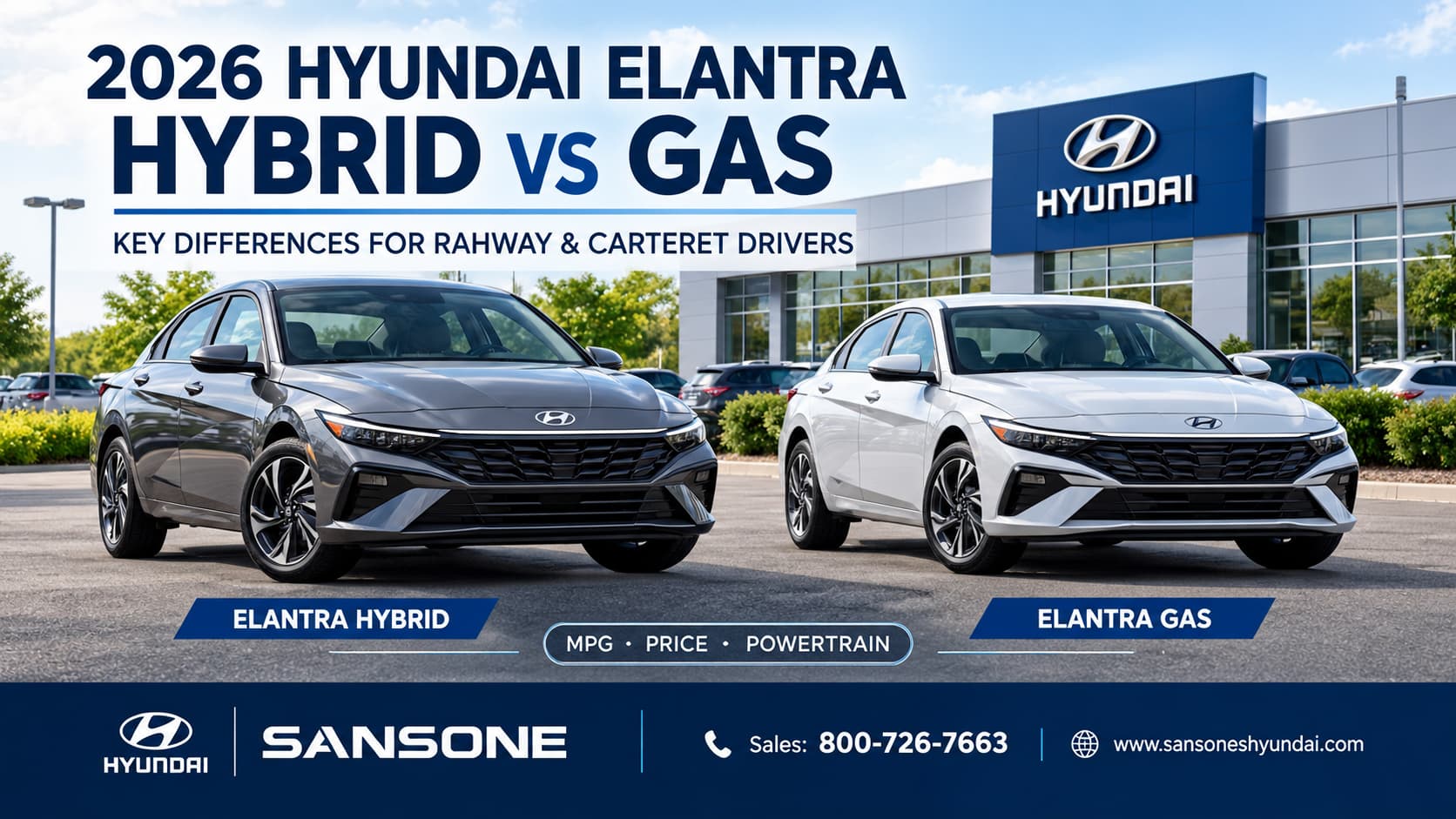
The 2026 Hyundai Elantra comes in two powertrain options, gas and hybrid, and for commuters in Rahway and Carteret, the choice is worth doing the math on before deciding. Both are practical, well-equipped sedans. But they serve different buyers, and the $2,825 starting MSRP difference between the gas SE and Hybrid blue means something different depending on how you drive. Here's a straight comparison. What Are the Key Specs for Each Powertrain? Spec 2026 Elantra Gas (SE) 2026 Elantra Hybrid (Blue) Engine 2.0L 4-cylinder 1.6L GDI 4-cylinder hybrid Combined System HP 147 hp 139 hp Combined Torque 132 lb-ft 195 lb-ft Transmission IVT 6-speed EcoShift® DCT EPA City MPG 31 51 EPA Highway MPG 40 58 EPA Combined MPG 35 54 Total Range ~434 miles 594 miles One thing worth noting on power: the hybrid's 139 combined system hp is slightly lower than the gas model's 147 hp, but its combined torque of 195 lb-ft significantly exceeds the gas model's 132 lb-ft. What Does the Commute Math Actually Look Like? Rahway to Newark is approximately 9 miles. Rahway to New York Penn Station via NJ Transit is a common reverse commute for drivers who park and ride. Carteret to Elizabeth is approximately 6 miles; Carteret to the Goethals Bridge approaches is approximately 5 miles. For a typical Rahway or Carteret commuter putting 12,000 miles annually, a mix of local stops, Route 1 corridor driving, and occasional highway runs, here's what each powertrain costs in fuel at current NJ gas prices of approximately $4.27 per gallon: Gas Elantra SE at 35 MPG combined: 12,000 miles ÷ 35 MPG = 343 gallons × $4.27 = approximately $1,464 per year Hybrid Elantra Blue at 54 MPG combined: 12,000 miles ÷ 54 MPG = 222 gallons × $4.27 = approximately $948 per year Annual fuel savings with hybrid: approximately $516 What Else Differs Between the Gas and Hybrid? Transmission feel The gas Elantra uses Hyundai's Smartstream IVT (Intelligent Variable Transmission), smooth and efficient, but with the characteristic stepped feel that some drivers notice. The Hybrid uses Hyundai's 6-speed EcoShift® Dual Clutch Transmission, which delivers more direct, responsive gear changes. For commuters who cover a mix of stop-and-go and open road, many drivers find the DCT's character more engaging than the IVT. Range The Hybrid Blue's EPA-estimated total range of 594 miles on a full tank, confirmed on hyundaiusa.com, means significantly fewer fuel stops than the gas model's approximately 434-mile range. For a commuter who fills up infrequently, this is a real convenience factor. Standard safety tech Both the gas and hybrid Elantra come standard with Hyundai's SmartSense suite, Forward Collision-Avoidance Assist, Lane Keeping Assist, Driver Attention Warning, and High Beam Assist. Neither version requires an upgrade to access the core safety features. What Does the Hybrid Give Up? Trunk space Hyundai lists 14.2 cubic feet of cargo volume for both the gas and Hybrid Elantra. The Hybrid does not give up trunk capacity compared to the standard model. Towing Neither the gas nor the hybrid Elantra is rated for towing. This is a sedan, not a hauler. Top-end power The hybrid's 139 combined hp is adequate for NJ commuting but not spirited. If driving enjoyment is a priority, if you are seeking more performance, you can consider the 2026 Elantra N Line or the separately offered Elantra N. Which One Makes More Sense for Rahway and Carteret Commuters? The hybrid makes more sense if: You drive 12,000+ miles annually and fuel costs are a genuine monthly consideration Your commute involves heavy stop-and-go driving where hybrid efficiency gains are most pronounced You want the longer 594-mile range between fill-ups The 4–5 year payback period on the price premium fits your ownership timeline The gas model makes more sense if: You don't drive 10,000 miles a year and the math on payback doesn't add up Lower upfront cost is the priority You want access to higher-output options such as the Elantra N Line or the separately offered Elantra N. Check Current Elantra Inventory at Sansone Hyundai Check the latest Elantra and Elantra Hybrid inventory at Sansone Hyundai located at 90-100 US Hwy 1 North, Woodbridge, NJ, 07001, serving Rahway, Carteret and surrounding communities. FAQs What is the MPG difference between the 2026 Hyundai Elantra gas and hybrid? The gas Elantra SE is EPA-estimated at 31 city / 40 highway / 35 combined MPG. The Hybrid Blue is EPA-estimated at 51 city / 58 highway / 54 combined MPG, a 20 MPG combined improvement. How much does the 2026 Hyundai Elantra Hybrid cost more than the gas model? The 2026 Elantra Hybrid Blue starts at $25,650 MSRP, while the gas Elantra SE starts at $22,825 MSRP—a $2,825 difference before freight, taxes, title, license and options. Is the Hyundai Elantra Hybrid worth it for a short commute? For commuters driving under 10,000 miles annually, the fuel savings may not offset the price premium within a typical 5–6 year ownership period. For commuters driving 12,000+ miles annually with frequent stop-and-go driving, the math favors the hybrid. What is the range of the 2026 Hyundai Elantra Hybrid? The 2026 Elantra Hybrid Blue has an EPA-estimated total driving range of 594 miles on a full tank, confirmed on hyundaiusa.com. Where can I test drive the 2026 Hyundai Elantra Hybrid near Rahway or Carteret, NJ? Sansone Hyundai is located at 90-100 US Hwy 1 North, Woodbridge, NJ 07001, approximately 10 minutes from Rahway and 8 minutes from Carteret.
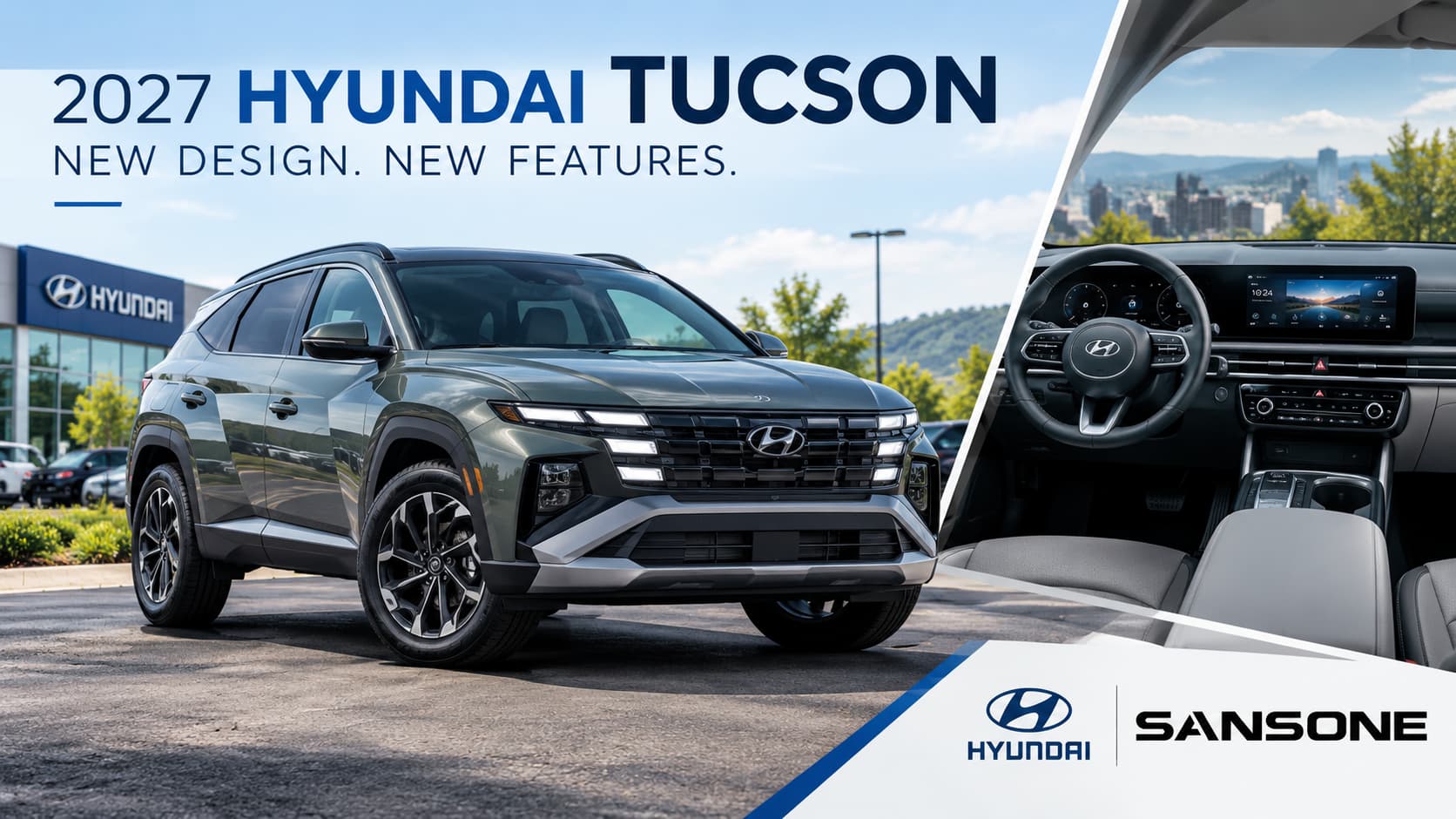
The Hyundai Tucson is one of Hyundai’s core compact SUVs and a major model in the brand’s global lineup. According to automotive press reports from August 2026, Hyundai is preparing a fifth-generation Tucson redesign with a significantly updated exterior, larger dimensions, and a new hybrid powertrain. Hyundai has not released official US specifications, pricing, or an on-sale date. Here's what's known so far, and what it means for buyers at Sansone Hyundai who currently own a 2026 Tucson or are considering one. What Does the 2027 Hyundai Tucson Actually Look Like? The design shift is significant. Reports describe the direction as "Art of Steel", a deliberate move away from the current generation's soft, parametric curves toward a boxier, more rugged and upright stance. Reported next-generation Hyundai Tucson design elements include: Exterior: A much more vertical front fascia with a flatter, more commanding hood A clamshell-style hood that wraps over the front fenders, reducing panel gaps and giving the nose a cleaner look Vertical LED daytime running light signatures replacing the current model's "angel wing" DRLs Main headlamps repositioned lower in the bumper, a layout also seen on the new Palisade Squared-off, muscular wheel arches giving the SUV a wider, more planted stance A front and rear light bar L-shaped rear light signatures that stretch into the bumper License plate relocated from the tailgate to the lower bumper The overall impression could be closer to the new Santa Fe's rugged character than the European-styled crossover the current Tucson resembles. Dimensions: The fifth-generation Tucson is reported to be 60mm longer, 40mm wider, 20mm taller, and 30mm longer in wheelbase than the current model. Second-row headroom is reported to increase by 29mm. The rear door is reported to open up to 83 degrees. What's New Inside the 2027 Tucson? Spy photographs of prototype cabins show a completely redesigned dashboard. The reported headline addition is a 17-inch central touchscreen paired with a 9.9-inch digital instrument cluster. Critically, despite the large screen, the 2027 Tucson could retain physical buttons for essential climate and media controls. This directly addresses one of the most consistent criticisms of fully touchscreen-based interiors, including, notably, the 2026 Mazda CX-5's removal of all physical buttons. The Tucson's retained physical controls sit alongside a redesigned steering wheel and revised door panel trim. Hyundai has not yet confirmed complete US-market technology specifications for the interior. Is the 2027 Hyundai Tucson Hybrid Confirmed? Reports from Hyundai's 2026 investor day indicate the Tucson Hybrid will launch alongside the standard model, with the hybrid system targeting 180 kW (241 hp) and 380 Nm (280 lb-ft) of torque. Final specifications have not been released. Final EPA fuel economy figures, battery capacity details, and US pricing have not been announced. A new XRT trim has also been shown alongside the fifth-generation Tucson reveal. Full XRT specifications are not yet released. What Does This Mean for Current Tucson Buyers? Automotive reports have indicated a Q4 2026 launch in initial markets. A specific US on-sale date and US pricing have not been announced. The practical implication for buyers at Sansone Hyundai depends on your timeline: If you need a Tucson now: The current 2026 Hyundai Tucson and 2026 Tucson Hybrid may both be available in inventory. The 2026 model is a strong, proven vehicle with available hybrid and plug-in hybrid powertrains, Hyundai's BlueLink connected car technology, and an IIHS Top Safety Pick+ rating. Buying now means getting a current-generation model at pricing that won't increase with the new model's arrival. If you can wait 6–12 months: The 2027 Tucson brings a significantly larger interior: 60mm more length and 30mm more wheelbase translate to meaningful real-world rear passenger space, plus the new hybrid powertrain and the updated interior architecture. For buyers for whom rear passenger room and technology are top priorities, waiting pays off. The honest trade-off: The 2027 Tucson's US price, exact US launch date, and full specifications remain unconfirmed. Waiting means uncertainty on all three fronts. Visit Sansone Hyundai in Woodbridge, NJ Sansone Hyundai is located at 90-100 US Hwy 1 North, Woodbridge, NJ 07001. Check the latest inventory and see current configurations before your visit. We can help you sort through the buy-now-vs-wait decision for your particular timeline and get you on the notification list for 2027 Tucson updates as Hyundai releases US-specific info. FAQs Has Hyundai officially confirmed the 2027 Tucson? Reports have revealed the fifth-generation Tucson's redesigned exterior and interior, and have indicated a Q4 2026 launch in initial markets. A US on-sale date has not been announced. How much bigger is the 2027 Hyundai Tucson than the current model? The fifth-generation Tucson is reported to be 60mm longer, 40mm wider, 20mm taller, and 30mm longer in wheelbase than the current model. Second-row headroom is reported to increase by 29mm. Is the 2027 Hyundai Tucson Hybrid confirmed? Reports have confirmed the Tucson Hybrid will launch alongside the standard model. The hybrid system is reported to target 180 kW (241 hp) and 380 Nm (280 lb-ft) of torque. Final specifications have not been released. Does the 2027 Tucson have a touchscreen? Reports confirm spy photographs of prototypes show a 17-inch central touchscreen paired with a 9.9-inch digital cluster, with physical buttons for climate and media controls visible in the cabin. When will the 2027 Hyundai Tucson be available in NJ? Reports confirmed a Q4 2026 launch in initial markets. A specific US on-sale date and US pricing have not been announced. Contact Sansone Hyundai in Woodbridge, NJ to be notified when US details are confirmed.
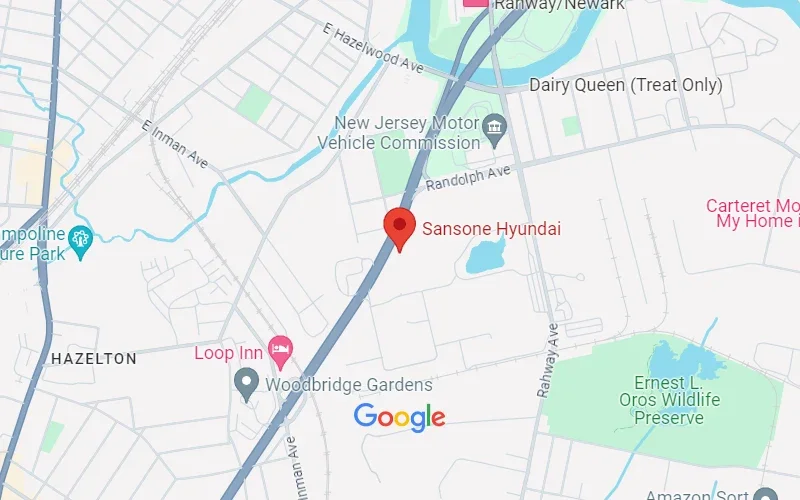
90-100 US Hwy 1 North
Woodbridge, NJ 07001
| Monday | 9:00AM - 8:00PM |
| Tuesday | 9:00AM - 8:00PM |
| Wednesday | 9:00AM - 8:00PM |
| Thursday | 9:00AM - 8:00PM |
| Friday | 9:00AM - 8:00PM |
| Saturday | 9:00AM - 7:00PM |
| Sunday | Closed |
| Monday | 7:00AM - 6:00PM |
| Tuesday | 7:00AM - 6:00PM |
| Wednesday | 7:00AM - 6:00PM |
| Thursday | 7:00AM - 6:00PM |
| Friday | 7:00AM - 6:00PM |
| Saturday | 7:00AM - 4:00PM |
| Sunday | Closed |
| Monday | 7:00AM - 6:00PM |
| Tuesday | 7:00AM - 6:00PM |
| Wednesday | 7:00AM - 6:00PM |
| Thursday | 7:00AM - 6:00PM |
| Friday | 7:00AM - 6:00PM |
| Saturday | 7:00AM - 4:00PM |
| Sunday | Closed |