


When you buy your next car, you probably consider fuel economy, comfort, and the latest tech. The safety systems often come in right there with all these factors. However, you may be able to do more with safety features by learning which ones you can rely on to identify hazards, stay aware around you, and help when a collision situation is approaching or imminent.
Drivers in Woodbridge Township and New Jersey can do more than browse the safety-feature shopping list by exploring the various functions that will serve them on daily commutes, highway adventures, and with their growing families and loved ones.
1. Which Collision-Avoidance Features Matter Most?
Forward collision warning & automatic emergency braking: One of the most significant safety features to look for is the forward collision warning (FCW) with automatic emergency braking (AEB). FCWs can alert you to a collision risk, and AEB will automatically brake if the technology determines a collision is about to occur. It is one of NHTSA’s recommended vehicle driver-assistance technologies, and research by IIHS shows front crash prevention systems effectively reduce collisions in real-world crashes. This is a feature that can make your commute a little less stressful on a busy freeway or highway, as it can save you from an accident when you hit unexpected braking.
2. Should I Be Shopping For Blind Spot Monitoring?
Yes, blind-spot monitoring can help with highway driving and changing lanes often. The system checks along either side of a car that the driver might miss with his or her rearview mirrors and alerts the driver if another vehicle is nearby. Blindspot detection was linked to a decrease in the rate of lane-change crashes, according to IIHS studies. When shopping, see if blind-spot monitoring is an option or standard on trim lines of vehicles you are comparing.
3. What About Lane-Keeping Assistance?
Lane Keeping Assist and Lane Following Assist are a great deal for drivers who log serious miles commuting or taking highway trips. The car can alert you if the vehicle strays from the lane or even steer back between the lines based on the technology. Hyundai’s Smart Sense package offers both these technologies (on qualified models).Note: Lane Keeping Assist/ Lane Following Assist is designed to help drivers, not take their focus off the task. Both work based on lane markers and can be impacted by road conditions and weather.
4. Which Safety Features Help When Parking?
Rear cross traffic alerts, rear automatic braking, parking sensors, and surround view cameras are just a few of the things that can make parking simpler, while simultaneously giving you more awareness of your vehicle. The rear cross traffic feature will give you the option to be alerted when another vehicle is coming in from the side while you are reversing; surround view cameras put together the footage from your cameras around your vehicle for a more panoramic view of the area, and parking sensors provide an acoustic warning of nearby obstacles. All of these can assist in parallel parking spaces, driveways, and tight parallel parking areas.
5. What Safety Features Are Helpful for Families?
Families should look for elements that add to overall awareness for passengers and the car around the vehicle; more specifically, what comes after rear seats are tucked in. Based on the car, there may be technology such as Rear Occupant Alert and the Smart Exit Warning. The list of available Smart Sense technologies in Hyundai includes both of those in addition to other driving assist features such as Rear Cross-Traffic Collision-Avoidance Assist and others helping to park cars. Children’s access into the car as well as their egress from it is what all parents ought to think about-not to mention the visibility for the drivers as to what’s coming into and driving past the car’s front.
6. Are More Safety Features Always Better?
Not exactly; what matters most is knowing what systems are fitted and their functionality. Safety features aren’t a substitute for paying attention at the wheel, the NHTSA said. Hyundai, too, calls its Smart Sense features supplemental. As part of the buying process, determine if a feature is available standard or as an option-or if it isn’t an option on the trim level you’re eyeing-and dedicate test-drive time to practicing operating and interacting with safety systems.
7. What Should You Check Before Buying?
Begin by considering safety features you need to accommodate your lifestyle: The commute-long driver would consider blind spot warning and adaptive cruise control, whereas families would search for rear warning in cars and helpful parking systems. For vehicle ratings for vehicle crashes, see IHS or the NISHA safety ratings. Take your opportunity when exploring the Hyundai lineup to Compare Models or their Safety Options. At Sansone Hyundai, we’re here to help you find The Perfect One For Your Drive.
Explore Safety-Focused Hyundai Options
When you’re ready to see Hyundai vehicles up close and in person, be sure to explore the all-new Hyundai vehicles currently in our inventory here at Sanson Hyundai and see for yourself what level of safety technology you can find in your ideal trim. Finally, be sure to set up a test drive of your preferred vehicle and put the safety technologies to the test during your personal encounter!
Connect with us


Recent Blog Entries
- Sansone Hyundai: Explore New Hyundai Vehicles in Woodbridge, NJ
- What Safety Features Matter Most When Buying a New Car?
- 2026 Hyundai IONIQ 9: Can a Three-Row EV Really Replace a Gas SUV?
- Explore the 2026 Hyundai Elantra SEL Sport Near North Woodbridge, NJ | Sansone Hyundai
- Explore the 2026 Hyundai IONIQ 5 SE Near North Woodbridge, NJ | Sansone Hyundai
Categories
Sansone Hyundai
Address
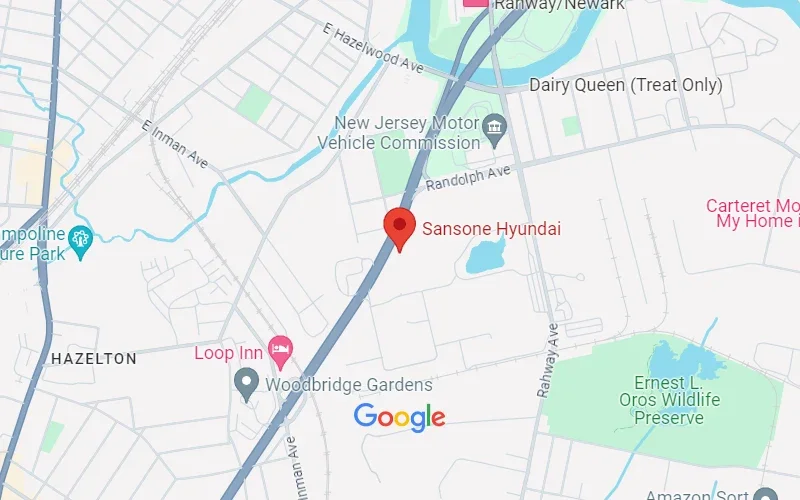
90-100 US Hwy 1 North
Woodbridge, NJ 07001
Phone
- Sales 800-726-7663
- Service 800-726-7663
- Parts 800-726-7663
| Monday | 9:00AM - 8:00PM |
| Tuesday | 9:00AM - 8:00PM |
| Wednesday | 9:00AM - 8:00PM |
| Thursday | 9:00AM - 8:00PM |
| Friday | 9:00AM - 8:00PM |
| Saturday | 9:00AM - 7:00PM |
| Sunday | Closed |
| Monday | 7:00AM - 6:00PM |
| Tuesday | 7:00AM - 6:00PM |
| Wednesday | 7:00AM - 6:00PM |
| Thursday | 7:00AM - 6:00PM |
| Friday | 7:00AM - 6:00PM |
| Saturday | 7:00AM - 4:00PM |
| Sunday | Closed |
| Monday | 7:00AM - 6:00PM |
| Tuesday | 7:00AM - 6:00PM |
| Wednesday | 7:00AM - 6:00PM |
| Thursday | 7:00AM - 6:00PM |
| Friday | 7:00AM - 6:00PM |
| Saturday | 7:00AM - 4:00PM |
| Sunday | Closed |